Tuesday, 21 June 2022

Day 4 Idaho to Montana

We left Burley, Idaho after a 6am breakfast and headed to a site around 25 minutes away where a Lewis’s Woodpecker had been reported, but this turned out to be not so good. So instead of wasting any time we promptly departed and headed to a lake around 2 hours away, seeing our first Bald Eagle and Swainson’s Hawks along the way. Amidst a vast open landscape of marsh, lakes, tall grasses and ponds we found our first Canvasback, as well as a Trumpeter Swan. I think we will all remember this site for the numerous and close Northern Harriers and Swainson’s Hawks that entertained us. 


Sandhill Crane


Leaving here we saw a pair of Sandhill Cranes much closer than before and a field of White-faced Ibis feeding amongst bright yellow flowers before driving just a few miles away to Sage Crossroads where we duly nailed Sage Thrasher before continuing on another 90 minute drive. After a quick coffee stop and picking up some sandwiches we arrived at Henry Lake around 1.30pm. 


Henry Lake


What a place this proved to be as we scoped flocks of wildfowl out on the glassy calm lake that consisted of American Wigeon, Ring-necked Duck, numerous Lesser Scaups, Canvasback, Redhead, Bufflehead, Common Goldeneye, Northern Shoveller, Cinnamon Teal, Green-winged Teal. This was probably the best mixed wildfowl flock any of us had ever seen! Also saw another Bald Eagle, several Red-necked Grebes in fine breeding dress, a Trumpeter Swan on a nest, a Sandhill Crane on what appeared to be a nest, Caspian Tern, Western Osprey, Audubon’s Warblers, and a very confiding Vesper Sparrow. 


It was another 75 minutes driving past Yellowstone amidst stunningly beautiful scenery of snow-capped mountains and steep-sided river valleys to Big Sky, where we were full of anticipation to find the water treatment works and the reported Barrow’s Goldeneye. Well, we found one pair of these much-wanted beasts immediately and then another pair on the pond across the road and amidst much excitement we tried to settle down to enjoy watching them. We couldn’t of had any better views in the sunshine and we lapped up the gorgeous purple sheen of the males head, his white crescent face marking and broad white flank streaks, with the females head shape and yellow bill very noticeably different from its commoner cousin! 


Barrow's Goldeneye


Buoyed by our success we drove 10 minutes further up the mountain to the ski resort in the forlorn hope of bumping into Black Rosyfinch, which we knew we were doomed to fail but at least we tried. By the time we arrived at our motel in Bozeman we were all suitably tired but rather pleased with the day’s haul.


Monday, 20 June 2022

Epic USA Day 3 - Off to Idaho

Left the Salt Lake City area early doors and drove to Bear Creek Migratory Bird Reserve where a quick check of the Visitor Centre resulted in 7 Sandhill Cranes (a key target for my group), a displaying Common Yellowthroat, lots of Yellow-headed Blackbirds and a pair of Great-tailed Grackles


Yellow-headed Blackbird is pretty common around here!


Then we drove over to the auto tour loop and began with very close views of Clark’s and Western Grebes right beside us. 


Here's a good comparison of 2 Western and a single Clark's Grebe


Clark's Grebes

Western Grebe


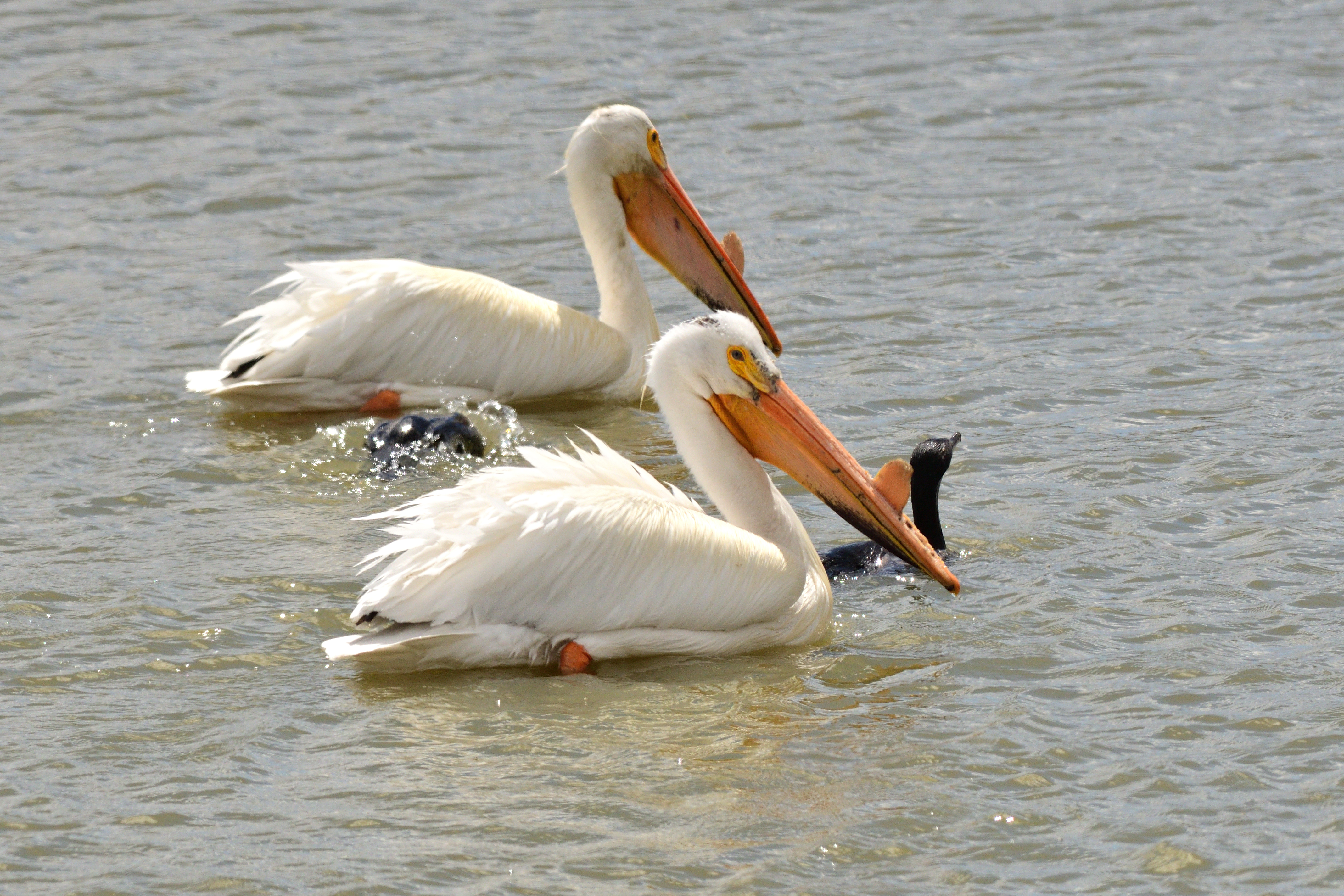
On the loop, Marsh Wrens showed repeatedly along with Savannah Sparrow, Black-necked Stilts, American Avocets, Northern Harrier, American Coot, Double-crested Cormorants, American White PelicansWilson’s Phalaropes, and a very late Trumpeter Swan.


American Avocet

Cinnamon Teal

Cliff Swallows were nesting on the garage door of a large farm building

Double-crested Cormorant

Marsh Wrens were very common

Pied-billed Grebe


This Trumpeter Swan should be many hundreds of miles further north by now....

American White Pelicans


Then we drove a couple of hours into Idaho and headed up into the Albion Hills where snow was still causing the road to be closed up into the campground where I had hoped to visit. As we headed up, a roadside stop produced Orange-crowned Warbler, Mountain Bluebird, and a pair of Black-headed Grosbeaks. However, despite the closed road we nailed Cassia Crossbill easily and we also saw Mountain Chickadee, very close Red-breasted Nuthatch, Pine Siskin, Ruby-crowned Kinglet, and a Slate-coloured Junco. 


Record shot of Cassia Crossbill


Walking up the road to the snowline and a Dusky Flycatcher showed well, with another Cassia Crossbill seen as we walked back downhill. Lower down we found a pair of cracking Red-naped Sapsuckers, along with Cassin’s Finches, Willow Flycatcher, Northern Flicker, and some confiding Western Tanagers. One final stop a the base of the hills gave us Hairy Woodpecker and a pair of Hammond’s Flycatchers before we drove to our next motel around 30 minutes away. And tonight we decided to have a night off from owling and catch up on some much-needed sleep.


Saturday, 18 June 2022

Epic USA Day 2

Headed over to Soldiers Pass Road for a bunch of desert specialities after a later than intended start! We picked up a few Brewer’s and Lark Sparrows on the drive in, but more importantly, our first and only Black-throated Sparrow of the trip. 


Black-throated Sparrow

Once at the right spot we began searching for Grey Vireo and eventually found a singing birdthat showed quite well, if not as close as we would have liked! We then spent quite a while looking for Sagebrush Sparrow, which involved walking out into the vast open plains that were covered in sagebrush. Eventually Pete picked one up and we all had great views of at least 3 birds.

Sagebrush Sparrow


During our search for the always problematical sparrow we found a Juniper Titmouse feeding in a….. Juniper tree! 


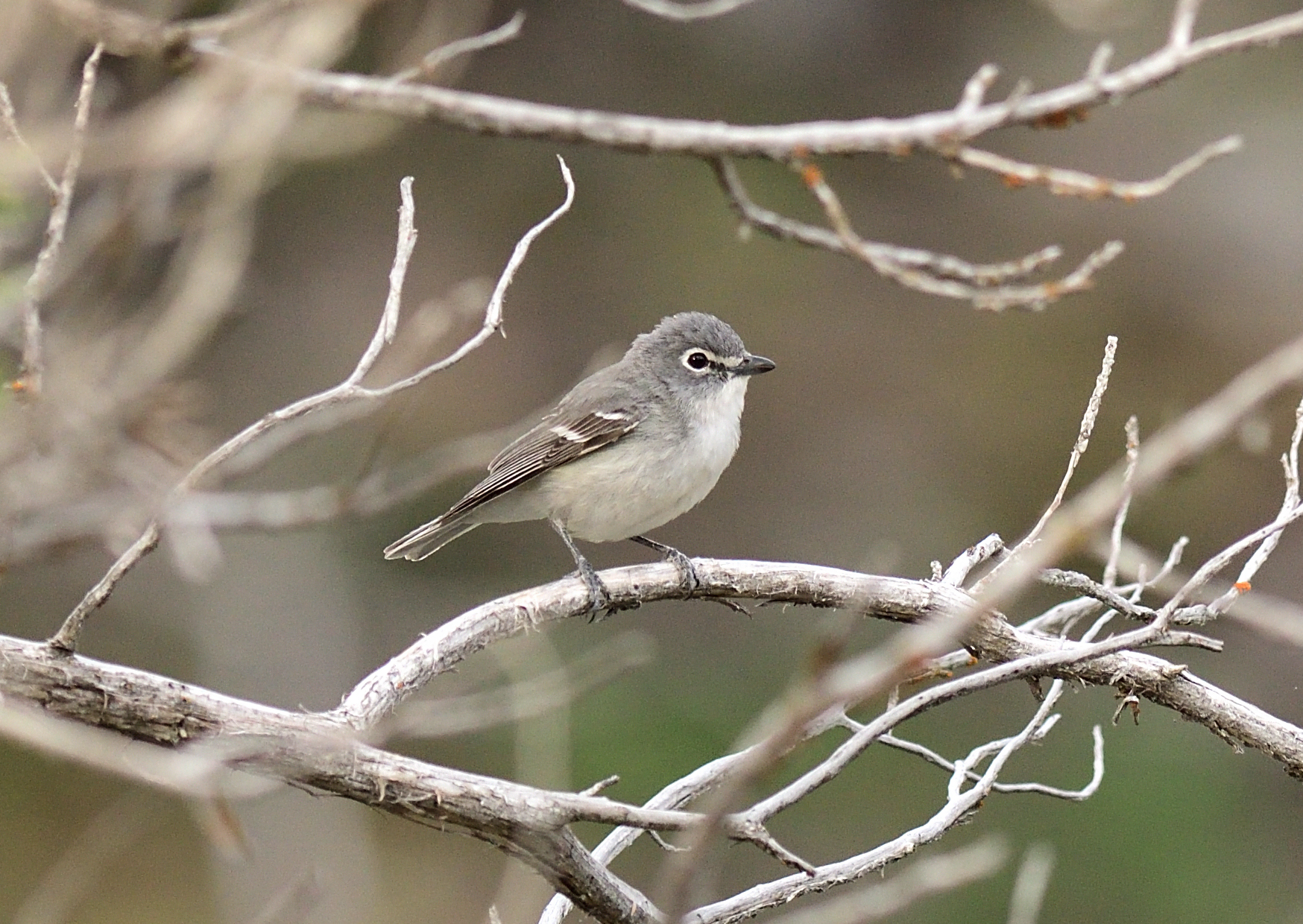
Moving on to a campground I visited last week via some close Long-billed Curlews, we tried in vain for 20 mins to see a ridiculously skulky Plumbeous Vireo before notching great views of a different individual nearby. 


Plumbeous Vireo


We also saw Chipping Sparrow and House Finches before walking into the campground where Dusky FlycatcherWestern TanagerBlack-headed Grosbeak, lots of Yellow Warblers, and as luck would have it a Northern Pygmy Owl perched high up in a bare tree. Wow! Last year we tried numerous sites for this bird but at our first attempt this year we nailed it… !! That’s birding.


So we left after a very successful morning and headed back to the motel, stopping for lunch along the way. After a little rest we drove up into the mountains… And scored with great views of Virginia’s WarblerBlack-capped ChickadeeWoodhouse’s Scrub JayBroad-tailed HummingbirdBullock’s Oriole, and a displaying pair of Cooper’s Hawks


Black-capped Chickadee

Virginia's Warbler

Woodhouse's Scrub Jay


After dinner we again headed out in the evening and this time had close views of 3 Common Poorwills, with one hovering right above us and a pair of Flammulated Owls


Flammulated Owls


A calling Northern Saw-wet Owl never showed.


Tuesday, 14 June 2022

Epic USA Day 1

After picking up Pete and Graham from the Salt Lake City airport our intrepid group headed over to Antelope Island State Park for our first birding of what would prove to be an epic trip! Antelope Island is a fascinating mix of habitats, starting when you cross the vast salt lake on a long causeway, bound on either side by salt flats and varying areas of water. Our first KilldeersWestern KingbirdsBlack-necked StiltsRed-winged BlackbirdsWestern Meadowlark, a cracking male Northern Harrier, and even a close Coyote. Further along were some Franklin’s Gulls along the shoreline, with a few Ring-billed and lots of California Gulls. Further along the causeway we found 5 Wilson’s Phalaropes in fine breeding plumage amongst the hundreds of American Avocets, plus there was our Black-necked (Eared) Grebes, plus the first Willet and Forster’s Terns. At the end of the causeway we veered left and headed over to the Garr Ranch, stopping along the way to scan a hillside where we found Brewer’s and Lark Sparrows singing close to the road. We also saw Northern MockingbirdLoggerhead Shrike, and scoped some American White Pelicans perched amongst a flock of Double-crested Cormorants. And then a little further on we scoped a distant Rock Wren. Possibly the highlight was a herd of 50+ Bison feeding on the flats below the road, with a Pronghorn in the grassland behind us.


American Bison

Brewer's Sparrow

Horned Lark

Great Horned Owl family


At the ranch we wandered along the trails and found 2 adults and 2 juvenile Great Horned Owls high up in a large tree, with a diminutive Least Flycatcher lower down. We also found Say’s PhoebeSong SparrowAudubon’sYellow and Wilson’s Warblers,Warbling VireoBullock’s OrioleWestern Wood Pewee, and a group of at least 3 Western Tanagers and a Mule Deer. Not a bad start to the tour indeed! 


With the weather warming up to the high 70’s we headed back to the mainland seeing our first Horned Larks, but we needed a better view of Rock Wren so tried a different area and sure enough we found another one a lot closer. Back on the causeway a nice selection of roosting birds on some rocky islands comprised Forster’s and 2 Caspian Terns, 3 RedheadsCinnamonGreen-winged and Blue-winged TealsCommon GoldeneyeNorthern Shoveller, and a flock of breeding plumaged Sanderlings.


From here we drove up into the beautiful snow-capped mountains and visited Little Cottonwood Canyon where unfortunately the feeders that I’d visited just a few days ago had been taken down! But a flock of White-crowned Sparrows, a few Steller’s Jays and a couple of Pine Siskins were still hanging around. A short walk up the valley was a little quiet but we did find a displaying Broad-tailed Hummingbird, an American Robin sitting on a nest, Mountain ChickadeeCassin’s FinchRuby-crowned Kinglet and a Northern Flicker. So with that done we returned to the motel at 6.30pm for a short rest before heading out to dinner and then visiting Squaw Peak Road… We heard Flammulated OwlNorthern Saw-whet Owl and Common Poorwill… But none of them came close enough to see.


Tuesday, 29 March 2022

DAY 13 CACHOTE ROAD - SANTO DOMINGO

It was absolutely bucketing down, raining cats and dogs, torrential downpour – however you want to describe this morning. In a couple of 4-wheel drive vehicles we ascended the Cachote Road for our last gettable endemic – Eastern Chat-Tanager. The rain never stopped as we drove up and on arriving at the appropriate spot it continued. With umbrella in hand we very quickly nailed this endemic, despite the atrocious conditions. The bird showed incredibly well in the driving rain and mist and I think we were very lucky to have had such views. 


What followed was what I can only describe as a farce really, but that’s another story and after the required amount of phaffing and miscommunication we drove back to the hotel, seeing not a lot apart froM one particularly bright male Cape May Warbler. And that was our birding done. I just had to drive 4 hours back to Santo Domingo and our airport hotel, calling into the airport to get the required Covid test for our flights back to Europe via the states tomorrow. And the tour concluded over a few cervezas this evening. Well done chaps!

Sunday, 27 March 2022

DAY 12 ALCOA ROAD - CABO ROJO - BARAHONA

We left in the early hours in order to give ourselves plenty of time to search for those pesky nightbirds we were still missing. Well, we didn’t get a sniff of either species until just at sunrise, when we were high up the Alcoa Road and had parked up amongst some conifers, that a Hispaniolan Nightjar responded to the tape and flew over a couple of us before disappearing into the forest. Unfortunately, most of the group were still getting out of the minibus at the time…..! Anyway, this spot seemed like a good place for breakfast and it also had a couple distant Hispaniolan Crossbills and a Hispaniolan Euphonia as well. We were looking for the endemic Golden Swallow, which breeds up here in the abandoned quarries that seem to be everywhere. Despite that we really had to search for this bird and maybe 2 hours later finally found a pair that appeared to be nesting in a hole at the top of a cliff. We were treated to great views as they flew around us and there was much relief all round, especially for yours truly as I was back at the minibus when the birds first appeared! We also saw several Myrtle Warblers up here, as well as another group of Hispaniolan Palm Crows.


White morph Reddish Egret


Dropping back down to the lowlands, we returned to the hotel and picked up our luggage and then drove out to Cabo Rojo once more, but didn’t find anything new. One pool held white-morph Reddish Egret and Little Blue Heron, with a bunch of Snowy Egrets but that was it. Any chance of a Double-striped Thick-Knee would have required a time machine I think! So we drove a few hours up to Barahona and our clifftop hotel, heading out for poorwills once again in the evening drew a blank.


Saturday, 26 March 2022

DAY 11 VILLA BARRANCOLI - LAGUNA OVIEDO - PEDERNALES

Set out early on the long drive to Pedernales, down in the south-west corner of Dominican Republic and very close to the border with Haiti. Our first stop was a bit of a mess as we ended up falling foul of the local park ranger at Laguna Rincon for not purchasing entry tickets. Who knew? Shame as it looked a decent area and we heard Spotted Rail, saw flocks of Village WeaversBelted Kingfisher, a Green Heron and a bunch of other previously seen species. So we got out of there and visited Laguna Oviedo, deciding to take a boat trip out onto the lake despite the windy conditions. I’m honestly not sure if it’s worth doing this boat ride again as it takes a good hour’s journey across the lake to get to the best birding area. 


American Flamingo

Royal Terns & Laughing Gulls


Still, it’s a good place for American Flamingo, with over 75 seen, along with Reddish Egret, Little Blue Heron, Common, Caspian and Royal Terns, and a few Laughing Gulls. Flocks of shorebirds were present and it was a little tricky manoeuvring the boat to get a decent view of them but eventually and with some persistence we were able to see Short-billed Dowitcher, Semipalmated Plover, Stilt Sandpipers, Ruddy Turnstone, Sanderling, Least and Western Sandpipers, and a Red Knot. I must admit I was grateful when we returned to the small quay and continue driving…!


We then headed to Cabo Rojo and we wanted to be in position for a seawatch in the evening as this is where Black-capped Petrels sometimes congregate before flying inland to their nesting burrows – some of them breed up at Zapoten, high up in the Sierra de Bahorucco. Well, we eventually worked out how to get up to the headland as you can’t drive up there due to a barrier across the road. Once at the right spot we set up scopes and…….well there were distant pteradroma-types constantly breaking the horizon but you couldn’t really say they were Black-capped Petrels so we’ll have to save that one for another trip! There were Brown PelicansWhite-tailed TropicbirdsMagnificent FrigatebirdsBrown Boobies, and cliff nesting Cave Swallows and Antillean Palm Swifts to keep us entertained, with a very confiding Hispaniolan Mango feeding on the cactus flowers right next to us. 


All that was left was to drive 25 minutes into Pedernales to a nice little hotel and it was in walking distance of a great restaurant where we enjoyed some nice cold cervezas and a delicious meal.


Friday, 25 March 2022

DAY 10 RABO DE GATO TRAIL - LAGO ENREQUILLO

Headed out at first light (roughly 06:45am) and drove along the Rabo de Gato Trail in our minibus for a few kilometres to a place where 2 Belgian birders had found a Bay-breasted Cuckoo yesterday. This was our most-wanted bird and knowing how difficult this species is to see in a normal year, let alone during this drought, we were ultra-keen to find it. Sure enough at the designated GPS spot I played the call once and up popped the cuckoo onto a bare branch some way off in the forest. Wow! It remained there for maybe a minute before dropping back down and out of sight. Amazing! So we continued walking further along the trail and stumbled across a wet area of forest caused by a leaking pipe. Whilst here, a guy came and started a generator to operate a water pump and the water started flowing and the large pipe had numerous leaks, one of which was designed to create what was in effect a stream. This area held numerous Key West Quail-Doves (maybe 4 or 5 pairs) and after much searching a White-fronted Quail-Dove, just walking along the forest floor some 40 yards away. Naturally there was panic as we all tried to secure this perfect tickable views, but we all did and there were high fives all round. 


Key West Quail-Dove


This damper section of forest was also to the liking of maybe half a dozen Ovenbirds, as well as Hispaniolan Lizard Cuckoo, Black-crowned Palm Tanager and Greater Antillean Bullfinch. And back at the bus there were 3 Hispaniolan Amazons hanging around in the surrounding trees.


Black-crowned Palm Tanager

Broad-billed Tody


Hispaniolan Parrot 

Returning to Villa Barrancoli for a late breakfast we had really nice views of a Hispaniolan Mango feeding on the flowers around the breakfast area. A male Hispaniolan Emerald also put in an appearance and we’d see it a few more times before we’d leave tomorrow as well. So after breakfast I decided to take a chance and go over to Lago Enrequillo for some Hispaniolan Palm Crows reported recently. Boy it was hot. So hot! At the first location we drew a blank so we decided to find a track down to the water and luckily one such path took us to a goat farm where I randomly played the call and several Palm Crows flew in and landed close by. 


Hispaniolan Palm Crow

After watching them for a bit we drove further along and found another track down to the water where we walked through a patch of tall thorn scrub and it seemed there had been a fall of warblers with Ovenbird, Northern Parulas everywhere, Black-throated Blue, Palm, Common Yellowthroat and American Redstart. Along the shoreline were a few shorebirds such as Greater and Lesser Yellowlegs, Least Sandpiper, Spotted Sandpiper, and a group of Least Sandpipers. Numerous dead trees out in the water were being used as perches for Western Osprey, and both Tricoloured and Great Blue Herons.


Upon return to Villa Barrancoli we saw the Hispaniolan Emerald again before driving back to the same wet area of forest from this morning but drew a blank on any quail-doves but did hear the Bay-breasted Cuckoo. So not a bad day so far. Later this evening we went out after the poorwill and nightjar but despite hearing numerous Hispaniolan Nightjars we just couldn’t locate one in the dense thorn scrub.